When your hearing feels obstructed, it can interfere with your daily schedule and leave you feeling withdrawn from your surroundings. Many people immediately fear they’re experiencing permanent hearing loss when, in reality, the culprit may be something much simpler: earwax buildup.
Grasping the difference between earwax buildup vs. hearing loss can help you know when a simple solution is possible and when it’s time to seek a hearing assessment. There is no reason to feel overwhelmed if sounds seem dampened. A clinical evaluation will provide the definitive answer, but the following guide details the main differences between wax-related issues and permanent loss.
What Earwax Buildup Feels Like
Your canals produce wax as a natural protective process to maintain health and keep debris away from the tympanic membrane. Medical complications only develop when the wax neglects to move out of the ear, leading to a substantial accumulation or blockage.
Signs of a blockage often feature:
- Dampened sound quality that occurs gradually or suddenly
- The perception that there is a physical plug in the canal
- Localized sensitivity or focused pain in the ear
- Constant buzzing or hissing sounds
- Auditory clarity that shifts or improves momentarily with jaw movement
Earwax-related hearing problems are often uneven, impacting one ear more than the other. Fortunately, extracting the obstruction typically resolves the signs immediately.
Recognizing the Signs of Permanent Auditory Decline
Hearing loss, especially age-related or trauma-based hearing loss, tends to progress slowly and doesn’t resolve when the ear is cleaned.
Signs of actual auditory impairment may feature:
- Issues with word clarity in crowded or noisy locations
- Frequently requesting others to repeat themselves
- A habit to increase sound volume notably to compensate for hearing loss
- Trouble detecting high-frequency tones
- Two-sided hearing shifts that affect both ears simultaneously
Unlike earwax buildup, auditory impairment doesn’t typically induce a feeling of obstruction or fullness.
Quick Guide: Cerumen vs. Auditory Decline
By looking at the timing and particular markers, you can frequently identify which issue is affecting you:
- Progression: Obstructions can feel sudden, while auditory decline is almost always gradual
- Longevity: Cerumen issues are treatable and short-term, whereas impairment is typically chronic
- Clues: Pressure suggests a blockage; difficulty with speech precision points to impairment
- Ear Balance: One-sided dull sound points to cerumen, while both sides point to impairment
Why Professional Consultation is Necessary
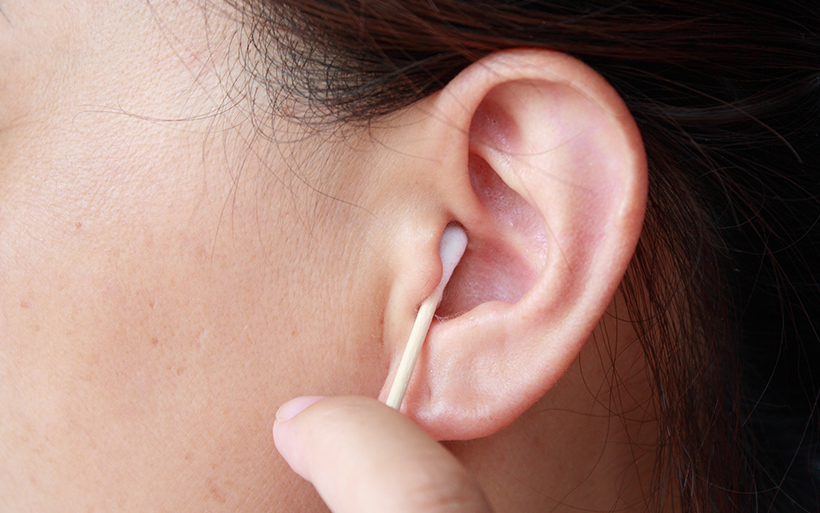
You may feel compelled to presume earwax is the culprit — and reach for Q-tips or store-bought treatments. Using external items commonly shoves the plug deeper into the canal, increasing the danger of injury.
Health experts caution that inserting anything smaller than your elbow in your ear can result in eardrum rupture and major impaction.
Delaying a professional evaluation for real hearing loss can result in losing out on treatments that protect your future mental and communal health.
How a Clinical Exam Helps
A brief professional exam is the only way to confirm if cerumen is truly the source of your dull hearing.
When cerumen is the cause, in-office flushing or clinical clearance provides instant resolution.
Should the auditory canal be unobstructed but hearing difficulties persist, an audiogram can assess if auditory impairment is identifiable and identify its category and degree.
Health experts advise obtaining a professional evaluation as promptly as you observe hearing changes that impact your routine.
Final Points on Cerumen and Hearing Wellness
Feeling like auditory signals are dull doesn’t always signify a permanent change.
In many cases, cerumen accumulation is the cause, and it’s extremely manageable.
A clinical assessment will provide you with the clarity you require to advance without concern.
Please note that self-diagnosis is no replacement for a professional exam when it comes to your auditory health.
Addressing the concern now stops the stress of the uncertainty and places you on the track to improved hearing.
Rather than wondering what is wrong, schedule a rapid consultation with our audiologists to get the truth.